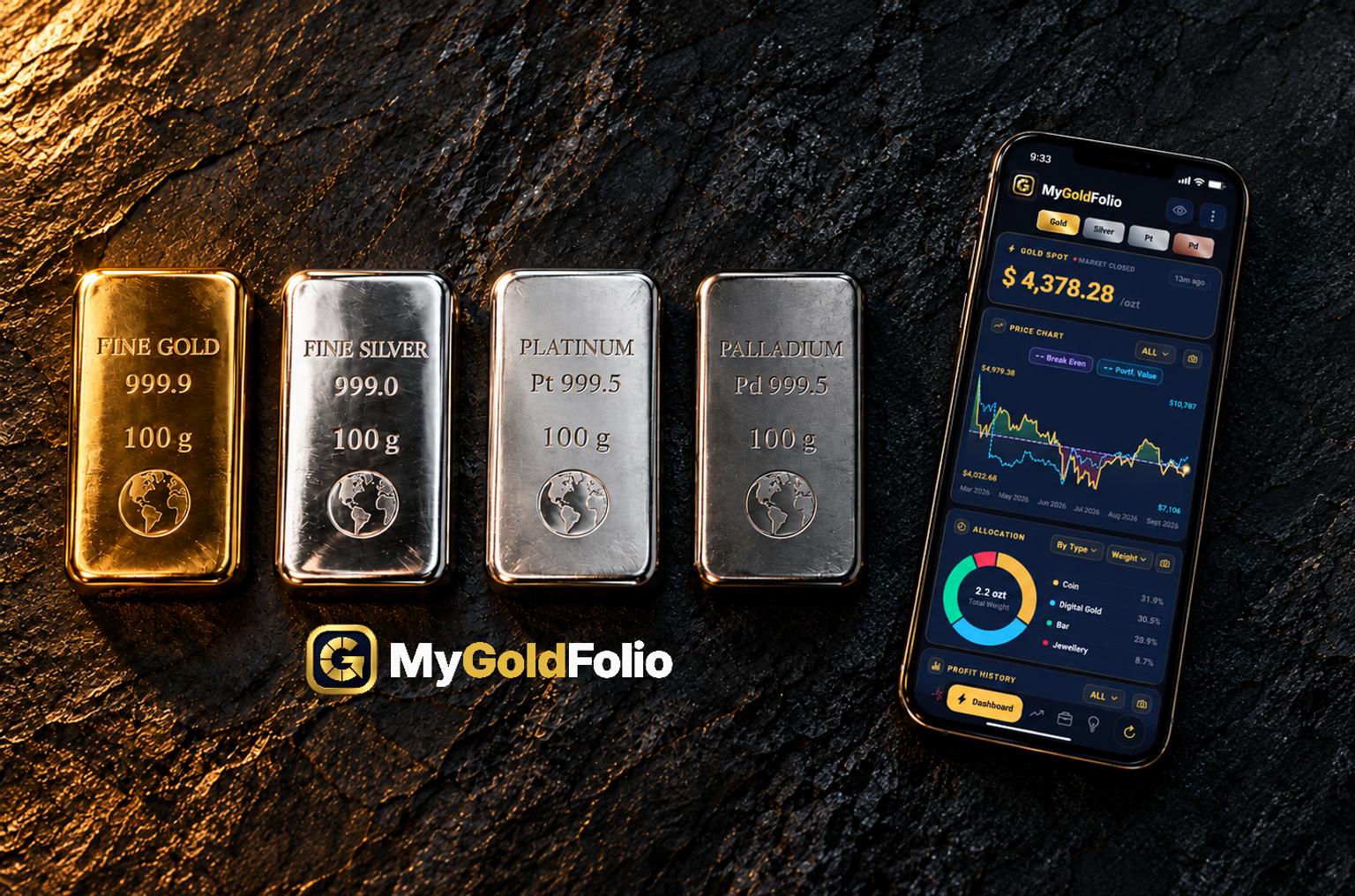
Beyond the Classic Duo: The Big Four Bullion Metals
Most private investors begin and end their precious metals journey with gold and silver. Gold provides unmatched monetary insurance against currency devaluation, while silver offers an accessible entry point with explosive industrial upside.
Yet the periodic table contains four noble investment metals: Gold (Au), Silver (Ag), Platinum (Pt), and Palladium (Pd). Known collectively as the platinum group metals (PGMs) alongside ruthenium, rhodium, and osmium, platinum and palladium are far rarer than gold and exhibit vastly different economic cycles.
Adding platinum and palladium transforms a traditional hedge into a multidimensional hard-asset strategy that captures industrial innovation without abandoning monetary defense.
- Gold (Au, 79): Pure monetary asset with near-zero industrial destruction.
- Silver (Ag, 47): Monetary-industrial hybrid driven by solar, electronics, and medical tech.
- Platinum (Pt, 78): Deep-value precious metal critical for emissions reduction and hydrogen fuel cells.
- Palladium (Pd, 46): High-tech catalyst metal with extreme geopolitical concentration.
The Economic Personalities of the 4 Metals
Each of the four metals serves a unique economic function. Treating them as interchangeable commodities is a fundamental mistake.
Gold is driven by central bank purchases, real interest rates, and geopolitical tension. Silver follows gold’s monetary direction but is heavily amplified by industrial manufacturing. Platinum and palladium, by contrast, are tightly bound to automotive manufacturing, green energy technologies, and strict chemical catalysis.
| Metal | Primary Role | Key Demand Drivers | Industrial Share | Mining Rarity vs Gold |
|---|---|---|---|---|
| Gold (Au) | Monetary store of value | Central banks, wealth preservation, jewelry | ~10% | Baseline (1x) |
| Silver (Ag) | Monetary-industrial hybrid | Solar PV panels, electronics, silver stacking | ~55% | ~8x more abundant |
| Platinum (Pt) | Deep value & clean tech | Auto catalysts, PEM hydrogen cells, luxury jewelry | ~65% | ~15x to 20x rarer |
| Palladium (Pd) | High-tech industrial catalyst | Gasoline auto catalysts, semiconductors, aerospace | ~85% | ~15x rarer |
The Historic Valuation Disconnect: Ratios to Watch
Ratios provide historical perspective that nominal dollar or euro spot prices cannot convey.
For most of modern history, Platinum traded at a substantial premium to Gold. In the 2000s, Platinum regularly cost over double the price of Gold. Today, that relationship has completely inverted: Gold trades at roughly 2.5x to 2.8x the price of Platinum—a historically extreme valuation gap that contrarian bullion stackers monitor closely.
Meanwhile, Platinum and Palladium experienced their own dramatic cycle. Palladium soared to over $3,000 per ounce during supply panics in 2021/2022, while Platinum remained near $900. After years of wild divergence, both metals have converged near price parity, opening strategic rebalancing opportunities.
- Gold-to-Platinum Ratio: Historically averaged below 1.0; today sits near historic highs (>2.5), signaling deep relative value for platinum.
- Platinum-to-Palladium Ratio: Has normalized back toward 1.0 parity after extreme decade-long swings.
- Supply Deficits: Over 70% of platinum is mined in South Africa under deep, energy-intensive conditions, while over 80% of palladium originates from Russia and South Africa combined.
Real-World Friction: Premiums, VAT, and Liquidity
Investing in platinum and palladium requires understanding market friction before making your first purchase.
In the European Union and the United Kingdom, physical investment gold enjoys statutory VAT exemption. Physical silver, platinum, and palladium, however, are treated as industrial raw materials and are generally subject to standard VAT or differential taxation unless purchased within bonded duty-free vaults (Zollfreilager).
Furthermore, because the physical retail market for platinum and palladium coins and bars is smaller than gold, dealers charge wider buy/sell spreads. Your break-even on a 1 oz platinum bar is typically higher than on a 1 oz gold Britannia or Maple Leaf.
- Factor in VAT or seek bonded duty-free storage when buying physical white metals.
- Stick to globally recognized refinery bars (Valcambi, PAMP, Argor-Heraeus) or sovereign coins (Platinum Philharmonic, Eagle, Maple Leaf) to ensure liquid resale.
- Track your exact delivered acquisition cost so your real break-even is never obscured by the spot price.
Three Balanced Allocation Blueprints
There is no universal formula for all investors. Your distribution across the four metals should reflect your investment horizon and tolerance for volatility.
| Strategy | Gold (Au) | Silver (Ag) | Platinum (Pt) | Palladium (Pd) | Strategic Intent |
|---|---|---|---|---|---|
| Conservative Anchor | 80% | 15% | 5% | 0% | Maximum wealth defense with minimal industrial volatility. |
| Balanced Bullion Stack | 65% | 25% | 7% | 3% | Robust monetary core with balanced green-tech and value upside. |
| Contrarian Asymmetric | 50% | 30% | 15% | 5% | High upside potential targeting the historic gold/platinum valuation gap. |
How MyGoldFolio Manages the 4-Metal Portfolio
Managing four metals with different spot prices, dealer spreads, and purchase currencies quickly overwhelms manual spreadsheets.
MyGoldFolio is engineered from the ground up for multi-metal tracking. You can activate Gold, Silver, Platinum, and Palladium individually in Settings, monitor independent live spot prices, and view your exact portfolio allocation by fine weight (grams or troy ounces) and fiat value.
Because dealer spreads differ between metals, MyGoldFolio allows dedicated dealer margin settings per metal. Even better, your 365-day holding period countdown (§ 23 EStG) tracks your physical platinum and palladium bars alongside your gold, ensuring complete tax clarity 100% privately on your Android device.
- Individual metal toggles in Settings to tailor your portfolio view.
- Live independent spot prices for Gold, Silver, Platinum, and Palladium.
- Dynamic asset allocation ring showing weight and currency distribution.
- Metal-specific dealer spread profiles for realistic break-even valuations.
- Holding period countdown for tax-matured lots on all four metals.
Four Golden Rules for 4-Metal Stacking
- Never sacrifice your gold anchor: Gold should remain the majority core of any physical bullion portfolio.
- Acknowledge the volatility: Platinum and palladium experience wider price swings than gold; size positions accordingly.
- Document every lot with purity and invoice references to protect your holding period tax status.
- Review your allocation periodically against long-term ratio targets rather than emotional short-term headlines.
Sources & Methodology
Macroeconomic data and mining statistics reference the World Platinum Investment Council (WPIC), London Platinum and Palladium Market (LPPM), and the London Bullion Market Association (LBMA). Tax regulations reference German Income Tax Act (§ 23 EStG) and European VAT directives. MyGoldFolio provides administrative portfolio tracking tools and does not offer financial, investment, or tax advice.
MyGoldFolio
Track all 4 precious metals in one private view
MyGoldFolio monitors Gold, Silver, Platinum, and Palladium with independent spot feeds, custom dealer spreads, and private holding-period countdowns on your Android phone.
More to explore
Market Basics · 7 min
Gold and Silver Premiums: Why Spot Price Is Not Your Break-Even
Learn how Gold and Silver premiums, dealer bid prices, delivery and other transaction costs affect the spot price needed to reach break-even.
Read guide
Tax & Strategy · 7 min
Physical Gold & Silver Taxes: How the 1-Year Holding Period and FIFO Work
Learn how holding periods affect precious metals taxes, why physical gold can become tax-free after 1 year, and how FIFO lot tracking protects your returns.
Read guideFrequently asked questions
Is platinum rarer than gold?
Yes. Global annual platinum mine production is approximately 190 metric tons, compared to over 3,000 metric tons for gold. All the platinum ever mined would fit into a cube roughly 8 meters on each side.
Does the 1-year tax-free holding rule apply to physical Platinum and Palladium?
In jurisdictions like Germany (§ 23 EStG), the 12-month private sales exemption applies to all physical precious metal bars and coins held privately, including platinum and palladium. Keep your purchase receipts to prove the holding period.
Why do platinum and palladium have wider dealer spreads than gold?
The physical retail bullion market for platinum and palladium is significantly smaller than for gold. Dealers manage higher inventory carrying costs and lower trading turnover, leading to wider bid/ask margins.
How does MyGoldFolio track all four precious metals?
MyGoldFolio allows you to toggle Gold, Silver, Platinum, and Palladium on or off in Settings → General. Each metal has its own live spot price, custom dealer spread profile, and allocation breakdown on your dashboard.